
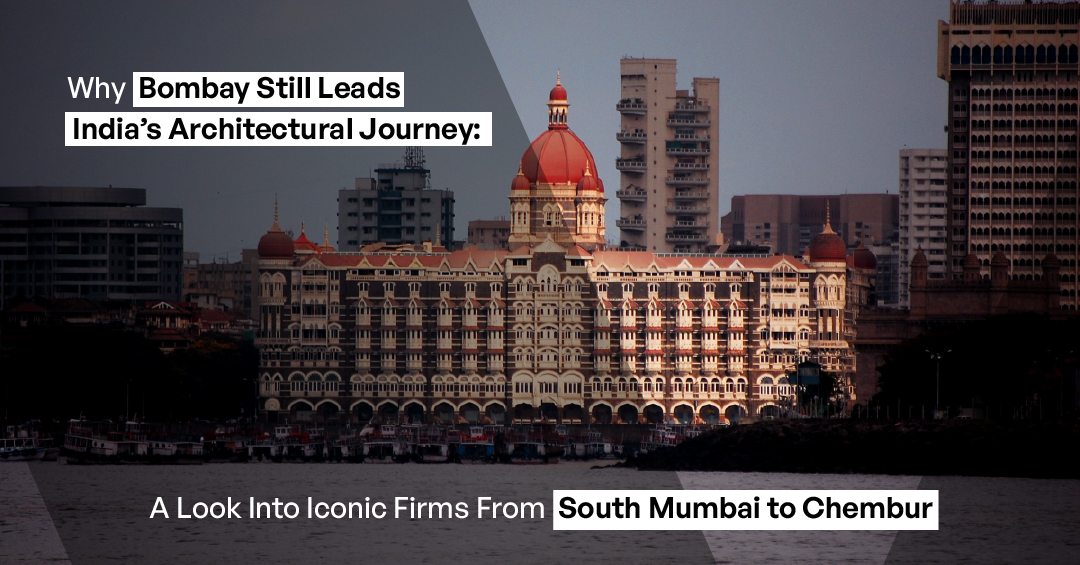
Why Bombay Still Leads India’s Architectural Journey: A Look Into Iconic Firms From South Mumbai to Chembur
Mumbai, still called Bombay by many and honestly with good reason, has never been just India’s financial capital. It’s a city where architecture carries memory. Buildings here don’t sit quietly; instead, these buildings tell stories of ambition, resilience, and constant reinvention. Just walk through South Bombay and you feel it right away. Colonial landmarks, Art Deco apartments, and streets that still hold their posture. Move toward Chembur, and the mood shifts. New residential towers, evolving commercial spaces, and a city still figuring itself out.
What sets Bombay apart is how it grows without erasing what came before. Gothic Revival buildings stand beside Art Deco homes. Mid-century modern structures share space with glass towers chasing relevance. Redevelopment happens, but it feels negotiated, not ruthless. Slow at times, frustrating, mostly necessary, and maybe that’s why it works. Bombay doesn’t aim for perfection. It adapts, layering history and ambition into the same skyline. That complexity is why the best architects in Bombay continue to shape how Indian cities think about space, growth, and what architecture should really stand for.
Why Mumbai Still Leads India’s Architectural Landscape
Mumbai’s architectural dominance is not accidental. It is the result of decades of urban experimentation, economic momentum, and design innovation. Here’s why the city continues to lead India’s architectural journey:
- Diverse Architectural Heritage
Mumbai houses one of the widest ranges of architectural styles in India-Victorian Gothic, Indo-Saracenic, Art Deco, Modernist, and contemporary sustainable design-all within a few kilometers. - High-Density Design Expertise
With limited land and a massive population, architects in Bombay have mastered vertical living, mixed-use developments, and space optimization better than any other Indian city. - Strong Client Awareness
Homebuyers, developers, and institutions in Mumbai are design-aware and quality-driven, pushing architectural firms to innovate rather than repeat templates. - Global Exposure and Standards
Mumbai-based firms often work on international collaborations, luxury developments, and high-budget commercial projects, aligning them with global architectural benchmarks. - Urban Redevelopment Leadership
From mill land conversions to cluster redevelopment and transit-oriented development, Mumbai has become India’s testing ground for complex urban renewal projects.
These factors collectively ensure that some of the best building design studios in Bombay, including those in Chembur, continue to influence architecture far beyond city limits.
Iconic Architectural Legacies: From South Bombay to Chembur
Mumbai’s architectural strength comes from its neighborhoods, each shaping distinct design philosophies influenced by history, context, and urban needs.
South Bombay: Custodians of Legacy and Precision
South Bombay remains the cultural heart of Mumbai’s architecture. Firms here often specialize in heritage conservation, bespoke residences, and premium commercial spaces. Many of the best architects in Bombay, including Vivek Varma Architects, have emerged from this zone, setting high standards.
Key focus areas:
- Adaptive reuse of heritage buildings
- High-end residential design
- Institutional and cultural architecture
- Urban planning and conservation projects
Architecture here balances refinement with restraint-quietly confident work that respects context.
Central Mumbai: Bridging Old Industry and New Urbanism
Neighborhoods like Lower Parel, Dadar, and Worli reflect Mumbai’s shift from industrial to contemporary urban living. Firms here have transformed mill lands into mixed-use developments.
Specializations include:
- Large-scale master planning
- Mixed-use and commercial developments
- High-rise residential towers
- Sustainable redevelopment strategies
This region highlights how Bombay architects manage density, scale, and livability simultaneously.
Chembur: Emerging Design Intelligence
Chembur has rapidly become a hub for thoughtful, context-driven architecture. Practices here focus on livability and practical solutions rather than spectacle. Many of the projects in this area are delivered by some of the best building design studios, known for combining functionality with elegant design.
Key strengths:
- Functional yet elegant residential projects
- Smart space planning for mid-income and premium housing
- Sustainable material use and climate-responsive design
- Deep understanding of local regulations and redevelopment norms
Architects in Chembur often collaborate closely with families, housing societies, and local developers, delivering designs that are human-scaled, practical, and future-ready.
How Mumbai’s Architects Shape the Future of Indian Cities
Mumbai’s architectural influence does not stop at city limits. It spills outward, often without announcement. From what we’ve seen, the city works like a stress test. If a design solution survives Mumbai’s density, regulations, monsoon, and pressure, it usually survives anywhere else in India.
To be fair, this was never intentional. Mumbai just faced problems earlier. Architects were forced to respond early. Those responses now travel.
Vertical Urban Living Models
Mumbai did not go vertical for style. It went vertical out of necessity.
- Early adoption of high-rise residential planning due to limited land
- Efficient lift core planning and circulation systems
- Fire safety and evacuation strategies refined through dense development
- Floor plates designed to balance light, ventilation, and privacy
Cities like Pune, Bengaluru, and Hyderabad now borrow these models when planning tall residential developments.
Redevelopment Frameworks
Redevelopment in Mumbai is rarely smooth. And that is exactly why it teaches so much.
- Society redevelopment models refined through lived experience
- Slum rehabilitation strategies integrated with mixed-use zoning
- Phased construction approaches that reduce displacement stress
- Long-term maintenance planning beyond project handover
These frameworks have quietly influenced urban redevelopment policies across India.
Sustainable Urban Practices
In Mumbai, sustainability is not a trend. It is survival.
- Rainwater harvesting systems designed for heavy monsoon cycles
- Passive ventilation and shading to reduce heat buildup
- Durable materials selected for coastal and high-humidity conditions
- Green building certifications integrated at large project scales
When applied in other cities, these practices often outperform local standards.
Design-Led Real Estate Branding
Mumbai changed how real estate thinks about architecture.
- Architectural identity used as a key sales driver
- Thoughtful facade design to improve long-term appeal
- Functional floor planning that enhances everyday living
- Design quality positioned as a value asset, not an expense
This shift now influences developer strategies across Indian cities.
Regulation Literacy as a Design Skill
Mumbai architects grow up navigating complexity.
- Deep familiarity with DCPR norms and zoning regulations
- Experience working within heritage and coastal restrictions
- Ability to design creatively within strict fire safety rules
- Faster project execution due to regulatory confidence
This skill makes Mumbai architects highly effective outside the city as well.
Designing for Failure, Not Perfection
Mumbai architects assume stress, not ideal conditions.
- Systems planned for heavy rainfall and flooding risk
- Materials chosen to withstand corrosion and wear
Services designed for long-term use and misuse - Buildings expected to age, not remain untouched
This mindset results in structures that last longer and perform better across India.
Conclusion
Bombay’s architectural leadership comes from its contradictions. Density and openness. Heritage and progress. Constraint forcing creativity. From the historic streets of South Bombay to the fast-evolving neighborhoods of Chembur, the city continues to produce practices that are bold but grounded, innovative yet responsible.
Globally known studios work alongside emerging local firms, keeping Mumbai India’s most dynamic architectural ecosystem. From heritage conservation and high-rise living to redevelopment and sustainable urban design, the best building design studios in Chembur, Bombay, and across the city like Vivek Varma Architects keep pushing what architecture in India can be.