
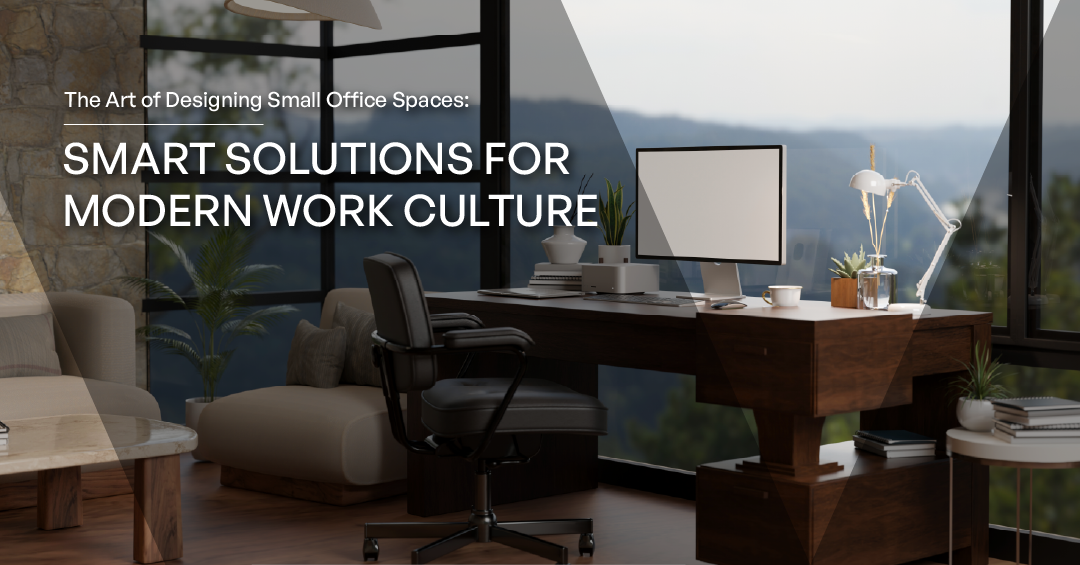
The Art of Designing Small Office Spaces: Smart Solutions for Modern Work Culture
Introduction
Small office spaces can feel tricky because they’re compact, busy, and every inch matters, but they don’t have to feel restricting. With thoughtful small office design, even a tiny workspace can feel open, bright, and surprisingly efficient. Modern work culture values flexibility, creativity, and collaboration just as much as productivity, which means people expect more than just a desk – they want a complete, comfortable work experience.
A cluttered, dull office can drain motivation, while a smartly designed compact space can spark creativity, teamwork, and focus. The real goal is balancing aesthetics with functionality. And that’s where small office design truly shines. It’s less about the size of the space and more about how wisely you use it through smart furniture choices, better lighting, and improved workflow. With the right approach, even rethinking a small office becomes a creative and enjoyable process.
The Need for Small Office Spaces in Modern Work Culture
Small office spaces are becoming more popular, and it’s not hard to see why. With urban real estate prices climbing, startups and small businesses often can’t justify large offices. Compact workspaces simply make sense. But cost isn’t the only factor – modern work culture is built on mobility, collaboration, and multi-functional environments. People no longer sit fixed at a desk all day; they move, meet, brainstorm, or work from wherever they feel most productive.
Sustainability and minimalism also shape today’s workplaces. Big, wasteful offices are fading out, while efficient, adaptable spaces are becoming the norm. Employees want environments that adjust to their needs, spaces where focused work, meetings, and casual discussions flow smoothly together.
Smartly designed small offices do more than save space; they reflect a company’s culture, values, and energy. In today’s world, the overall work experience matters just as much as the output.
Creative Ways to Maximize Small Office Spaces
Maximizing a small office isn’t about adding more desks, it’s about planning smartly. Using vertical space through tall shelves, wall-mounted storage, and hanging organizers frees up the floor while keeping everything within reach. Even a few floating shelves can make the layout feel cleaner and more functional.
Furniture choices matter just as much. Multi-purpose desks, foldable chairs, modular tables, and storage-friendly benches help the space adapt to different needs. Lighting also plays a big role – natural light works best, but when it’s limited, layered artificial lighting and mirrors can make the office feel brighter and more spacious. Add a few plants, and the space instantly feels more open and alive.
Creating zones is another effective strategy. Even in a compact office, subtle separators like a rug, a change in lighting, or specific furniture can define areas for focus, collaboration, and relaxation. These mini-workspaces make the office feel organized and support better productivity.
Practical Tips for Small Office Spaces
Following are some tips that you can apply to make the most out of a small office space:
1. Declutter intelligently: Every item should serve a purpose. Go beyond just throwing things away; instead, categorize, store, or digitize. Old files and random supplies can make a small space feel cluttered and suffocating. Regular cleanup sessions are essential, not just for looks, but for productivity and efficiency.
2. Use light and reflective colors: Apply color theory; whites, pastels, and soft neutrals make a room feel more open. Accent colors can add personality without being overwhelming. Use mirrors; mirrors aren’t just decorative pieces, they reflect light and visually expand the office. Even a small mirror placed strategically can change the feel of a cramped corner.
3. Flexible, multi-functional furniture: Desks with drawers, foldable tables, and modular seating allow the office to adapt quickly. One day it’s a meeting area; the next it’s a casual brainstorming zone. Chairs on wheels make rearranging office spaces effortless. So, keep this thing in mind: “Flexibility is the key.”
4. Maximize vertical and hidden storage: Use wall-mounted cabinets, hanging racks, pegboards, and under-desk storage, as they are game-changers. Every nook counts, even under windows or staircases. A pegboard can hold office supplies neatly, freeing up desk space for actual work.
5. Thoughtful lighting and greenery: Natural light is ideal, but layered artificial lighting works wonders. Task lights, ambient lights, and LED strips brighten dark corners. A few indoor plants, such as succulents, snake plants, or air-purifying options, will naturally improve air quality and make the office feel fresh and inviting.
6. Define functional zones: Even compact spaces can have distinct areas for focus and collaboration. For this, use rugs, furniture, or lighting changes to signal these zones. A cozy corner with chairs and a coffee table can become a casual meeting spot without taking up much space.
7. Go digital wherever possible: Cloud storage, wireless devices, and collaborative apps reduce clutter. Fewer physical files mean cleaner desks, easier cleaning, and a calmer, clutter-free atmosphere. It also makes reconfiguring workstations easier.
8. Personalize thoughtfully: Encourage employees to add small touches; ask them to add a photo, a plant, or a quirky mug, but remember not to overdo it, as minimal personalization keeps the office human without creating chaos.
9. Re-evaluate space use regularly: Offices evolve as teams grow and projects change. Check every few months if the layout still works. Maybe a desk can move, and storage can be reorganized. Continuous optimization keeps the space efficient and dynamic, so keep a check on it.
Benefits of Designing Small Office Spaces
- Boosts Productivity: A well-organized, clutter-free small office helps people focus better. Less distraction, less chaos, and honestly way fewer “I can’t find this document” moments.
- Cost-Efficient Setup: Small spaces are pocket-friendly as they naturally reduce rent, electricity, and furnishing costs. And when designed smartly, you still get the vibe and efficiency of a larger workspace easily.
- Improves Team Collaboration: Compact offices encourage more interaction among employees. People communicate faster, brainstorm easily, and feel more connected. It creates that warm, energetic culture that modern teams love.
- Enhances Employee Experience: Acozy, smartly designed space feels more human because employees feel more comfortable, seen, and motivated. This boosts the overall morale and engagement of the employees.
- Supports Sustainability: Smaller offices consume fewer resources; less space means less wastage, fewer materials, and overall eco-friendlier operations. This is something modern work culture seriously values.
- Easy to Adapt and Reconfigure: Smart layouts, modular furniture, and digital workflows make small offices super flexible. You can switch things around quickly without renovating or spending huge amounts.
- Better Space Utilization: Every corner is useful, and every corner serves a purpose when designed well. Vertical storage, multi-functional furniture, smart design, and defined mini-zones ensure that nothing goes unused.
Conclusion
Designing a small office is basically about making every inch work smarter. Size doesn’t define productivity; good planning, natural light, practical layouts, and a design that understands real people do. When you focus on how teams move, think, and collaborate, even a compact space can feel open and inspiring.
This is exactly where Vivek Varma Architects stands out. We don’t force trendy concepts or cluttered “Pinterest-perfect” ideas. Instead, we study how your team actually uses the space and create layouts that feel effortless: Storage that blends in, furniture that adapts, and design choices that make a small office feel bigger without trying too hard.
In the end, small offices succeed on clarity and thoughtfulness. And with the right design mindset and the right architects, even the tiniest workspace can become warm, modern, and surprisingly efficient.